Busting Myths About Eating Disorders
By Jennifer Kreatsoulas, PhD, C-IAYT, Founder
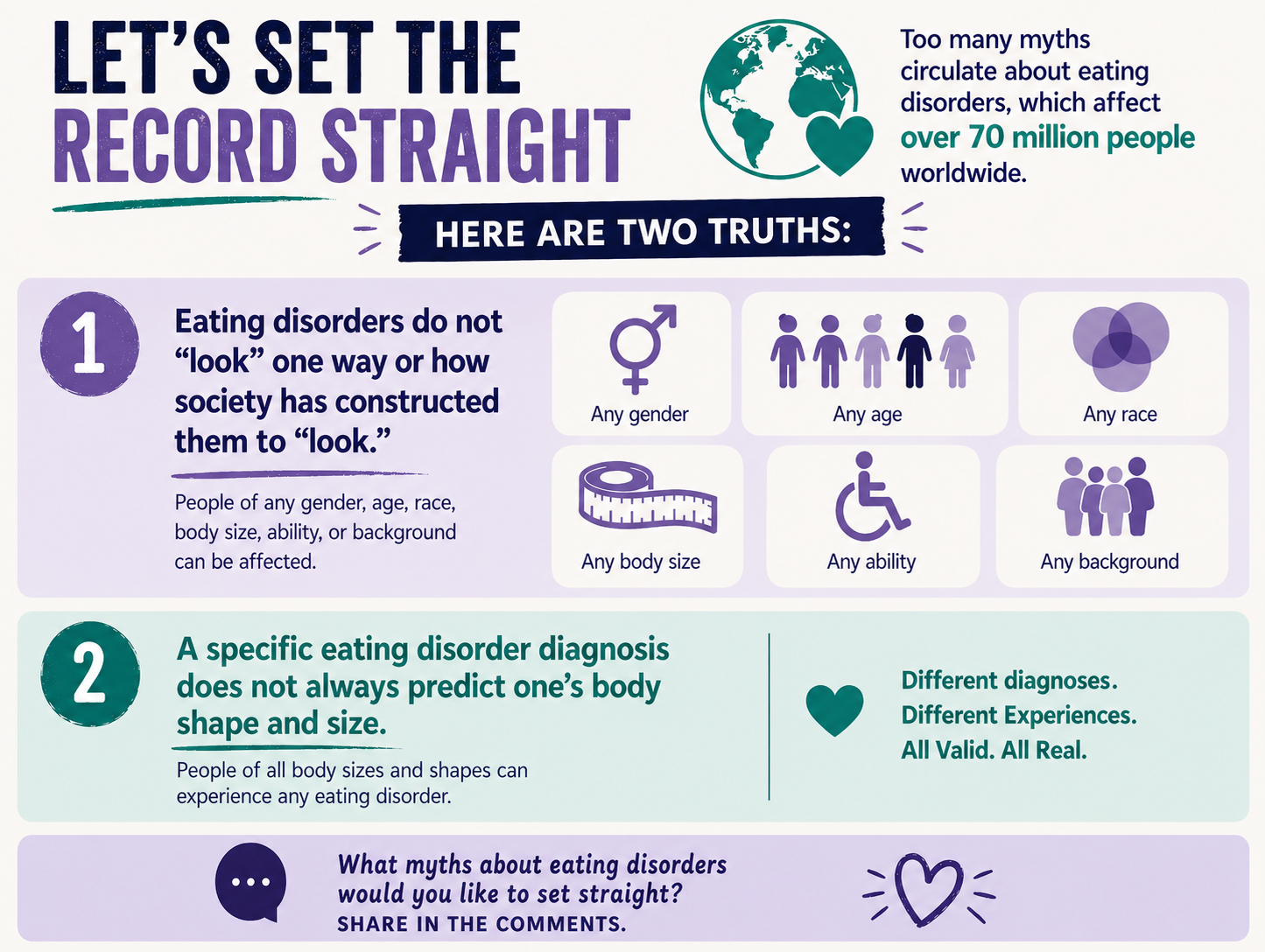
Too many myths circulate in the media and general social consciousness about eating disorders, which affect over 70 million people worldwide. I am sure you have encountered a few yourself—everything from eating disorders are a choice to an obsession with vanity and are only about food. There are many more, especially about who “gets them” and who doesn’t. It is important to set the record straight about what eating disorders are NOT and who they affect, so that individuals and groups receive appropriate care, validation, and understanding. Too often, this is not the case, and the myths about eating disorders win out, while those who suffer are silenced. First, let’s look at some definitions of eating disorders to clarify their seriousness.
What Are Eating Disorders?
According to the National Eating Disorder Eating Disorder Association (NEDA), eating disorders are serious but treatable mental illnesses that can affect people of every age, sex, gender, race, ethnicity, and socioeconomic group. Eating disorders are not a choice. They are complex medical and psychiatric illnesses that individuals don’t choose. They are bio-psycho-social diseases, which means that genetic, biological, environmental, and social elements all play a role.
According to the Diagnostic and Statistical Manual of Mental Disorders (DSM-5), an eating disorder is a behavioral condition characterized by severe, persistent disturbance in eating behaviors and is associated with distressing emotions and thoughts. This type of disorder can affect physical, psychological, and social function.
While anorexia and bulimia are the most “well-known” eating disorders, there are many types, and include anorexia nervosa, bulimia nervosa, binge eating disorder, avoidant restrictive food intake disorder, pica, rumination disorder, diabulimia, muscle dysmorphia, and unspecified feeding or eating disorder. There are subtypes of these disorders, too, and individuals can suffer from more than one type. Orthorexia is not listed in the DSM-5 but is on the rise. This is an obsessive and excessive focus on eating only healthy foods and avoiding foods believed to be harmful. This eating disorder is easily normalized by diet culture and is praised for will power to the extreme.
My personal definition is that eating disorders are ways to cope with pain, and the behaviors and thoughts that perpetuate them severely sever one’s relationship with their body, to the extent that the body feels like an unsafe place that needs to be changed, tamed, and solved. Eating disorders are themselves a trauma.
Two Truths About Eating Disorders
When I train professionals about the role of yoga in eating disorder recovery, I always start off the first module with a discussion on myths about eating disorders. Without fail, two myths are always mentioned:
1. Eating disorders do not “look” one way or how society has constructed them to “look.”
2. The specific eating disorder diagnosis does not always predict one's body size and shape.
In movies and the media, and even in schools, the medical world, and society in general, eating disorders are labeled as a white, middle to upper class teenager problem—skinny white girls, mostly emaciated, obsessed with their looks who starve themselves to that end, or make themselves throw up. While this group of girls are affected by eating disorders, for very different and serious reasons other than vanity, many age groups, including women well into midlife, are affected, as are boys and men, and individuals from all races and socioeconomic backgrounds.
It’s important to understand that, for example, anorexia doesn’t always mean skinny or emaciated, just as binge eating disorder does not always mean overweight. One’s type of eating disorder is not predicated on their body size and shape. All types of eating disorders can “look” all kinds of ways.
What’s most essential is helping those who suffer 1) become medically stable, as the behaviors associated with eating disorders can have serious physical effects, including blood pressure, heart, electrolyte, hormonal and other comorbidities, 2) receive emotional and mental support from trained eating disorder specialists, as therapists, dietitians, and other healthcare providers without specialized training will not be educated on the nuances of these illnesses.
Raising Awareness About Who Is Affected by Eating Disorders
Here’s a few statistics from the Alliance for Eating Disorders that highlight just how common eating disorders are in groups that are often not represented in the media or generally not associated with suffering from eating disorders.
Eating disorders have the 2nd highest mortality rate among all psychiatric illness, with someone dying every 52 minutes as a direct result.
Hospital admissions for adolescents with eating disorders more than doubled during the pandemic.
Approximately 25% of individuals experiencing eating disorders have post-traumatic stress disorder. Other co-occurring mental health diagnoses include depression, anxiety, bipolar, obsessive compulsive disorder, and addiction.
BIPOC with eating disorders are half as likely to be diagnosed or to receive treatment.
54% or LGBTQ+ adolescents have been diagnosed with an eating disorder during their lifetime.
One in three people experiencing an eating disorder is male.
By age 40, one in five women have dealt with an eating disorder.
Studies have shown that eating disorders affect individuals in mid-life, with 15% of women over the age of 50 are engaged in eating disorder behaviors.
Important to note that all ethnicities and cultural groups are affected, and many face barriers to care.
If you are interested in more statistics about eating disorders, I highly recommend you check out the Alliance for Eating Disorders. Their website and Instagram are informative and do an excellent job of busting myths while educating about eating disorders.
Busting myths related to the notion that eating disorders look a certain way opens the door for more people to feel safe to come forward and receive help. Educating the medical community as well as general society are key to moving the care forward for those who are affected by eating disorders.
What myths about eating disorders would you like to set straight? Share in the comments.