By Jennifer Kreatsoulas, PhD, C-IAYT, Founder
Yoga, with its tenets of peacefulness, self-compassion, mindfulness, and self-empathy, can enhance recovery from eating disorders. Yoga promotes harmony within and strengthens the relationship with the body through physical poses (asanas), breathing exercises (pranayama), non-harmful self-care (ahimsa), and meditation. For some people, breathing exercises can help calm anxiety, slow down spinning thinking and cultivate presence and mental clarity. Yoga poses can build mental and physical strength and help some individuals with becoming more comfortable in and accepting of their bodies. Together, these practices offer therapeutic experiences that build resilience and serve as healthy ways of coping with life’s challenges.
It is important to recognize, however, that not all yoga classes and yoga studio environments support a recovery mindset. Like many health campaigns today, yoga has been swept along with social media, promoting the stereotype of a particular body type. The yoga selfie craze can breed body comparison, and the hyper-focus on yoga as fitness can inadvertently prompt competition, overexertion and perfectionism.
What to Look for in Yoga Class
Finding a public yoga class that aligns with the values of recovery is important and may take time, given how fitness focused many yoga classes and environments are. To support eating disorder recovery, I recommend choosing offerings that are gentle for beginners or restorative in nature as these practices are focused on bringing balance to all the systems of the body and calming the mind. Yin yoga can also be a nice option as well as flow classes that are not vigorous or heated.
Vigorous styles are more appropriate for those in well-established recovery with stable physical activity. When possible, take classes with yoga teachers who are trained in trauma sensitive or trauma informed yoga, and in studios that do not have mirrors. Mirrors can be a distraction and heighten body image concerns. Because learning to listen to one’s body is a vital aspect of eating disorder recovery, an environment without mirrors might encourage a more internal experience.
Therapeutic Aspects of Yoga for Recovery
When considering a yoga class or studio, here’s a few key aspects that will contribute to a more therapeutic experience:
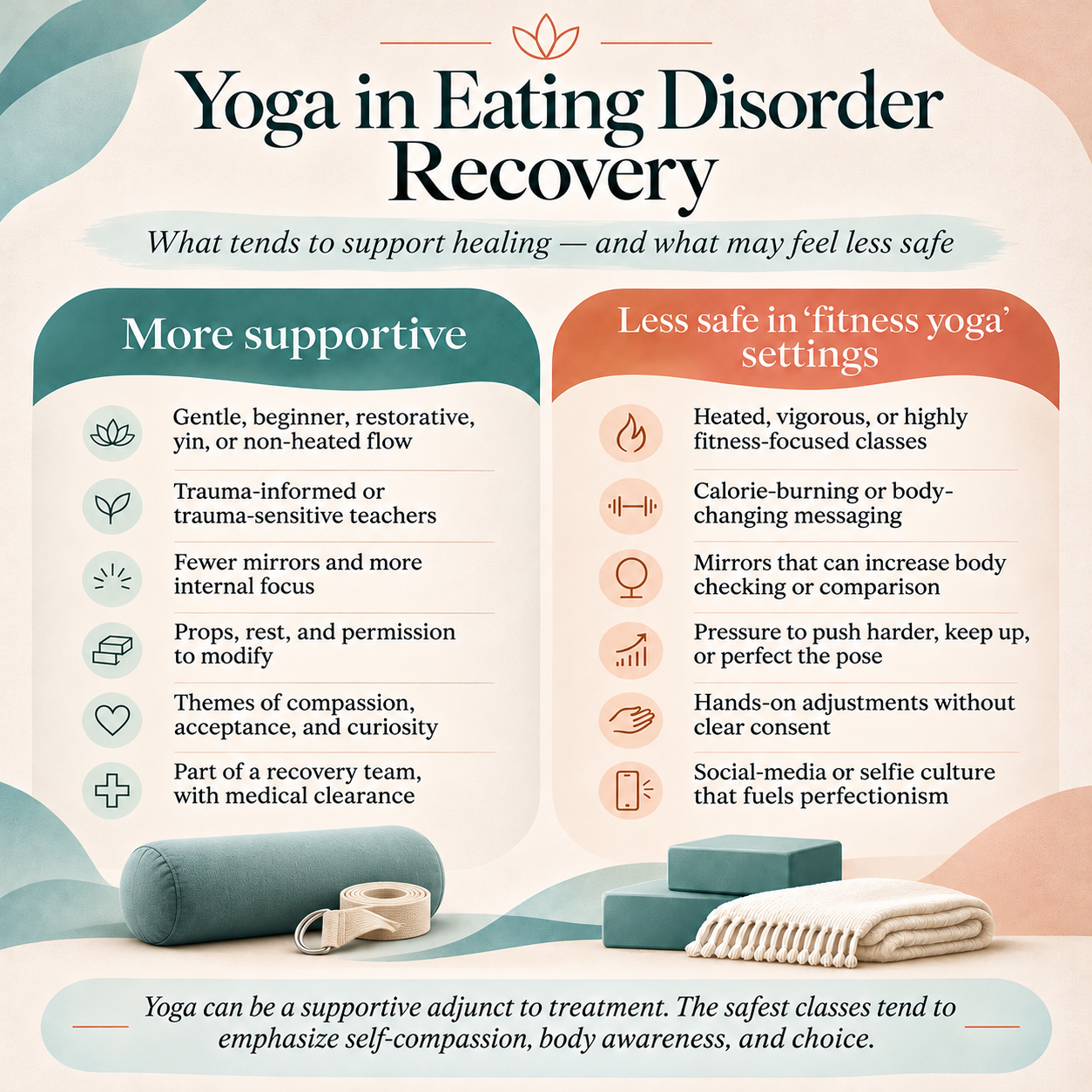
Classes that are labeled as gentle, beginner, restorative, yin, or non-heated flow
Classes that are led by teachers with trauma sensitive or trauma informed training
Few to no mirrors to help limit body image challenges and encourage internal focus
Props, rest, and permission to modify poses/shapes are offered
Themes like compassion, acceptance, and curiosity are incorporated into the practice
“Less Safe” Aspects of Yoga for Recovery
When considering a yoga class or studio, here’s a few key aspects that can interfere with a recovery mindset and goals:
Classes that are heated, vigorous, or highly fitness focused
Calorie burning or body changing messaging
Mirrors, which can increase body checking and comparison
Competitive messaging to push harder, keep up, or perfect a pose
Hands on adjustments without clear consent
Social media or selfie culture that fuels perfectionism and weight loss
It takes tremendous courage to pursue eating disorder recovery, as does showing up for a yoga class and exploring your relationship with your body and yourself. Choosing classes that support this exploration in sensitive and caring ways is a powerful expression of self-care and commitment to yourself and recovery. Working privately with a yoga therapist who specializes in eating disorders, is another avenue you can also explore to develop yoga-based tools and coping strategies as you explore emotional work with your outpatient team. Whether you’ve been practicing yoga for some time or are considering try it, following the guidelines offered here will help you choose classes that align with all the hard work you are putting into your recovery.